
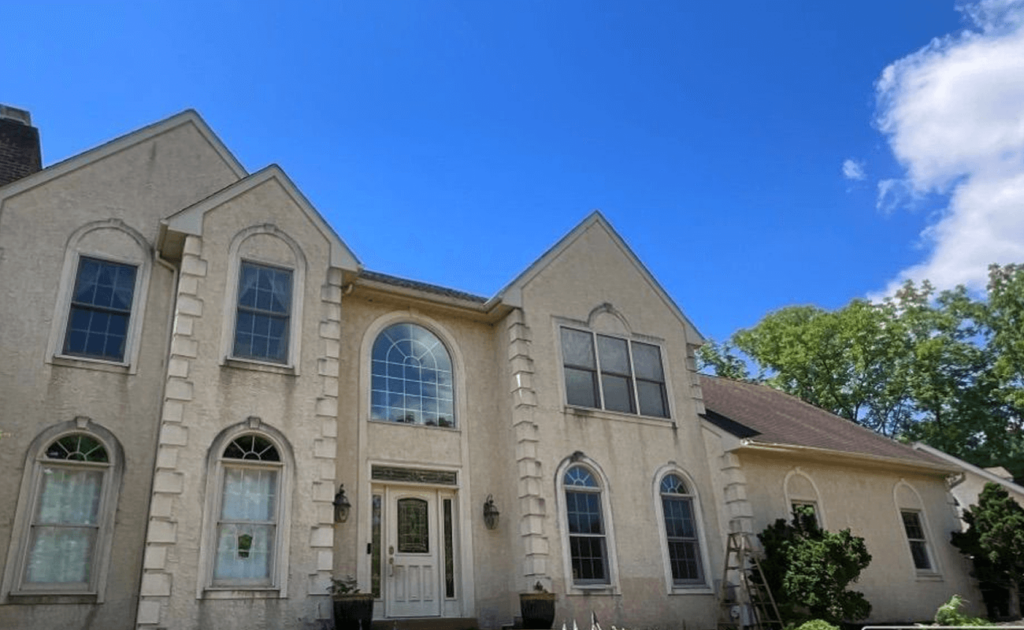
Combining stucco with stone, brick, or wood can give a home more depth, define important architectural features, and create a more balanced exterior. The best results come from giving each material a clear purpose instead of placing several finishes randomly across the façade.
For many homes, stucco works well as the main wall finish. Stone or brick can define the entrance, lower level, columns, chimney, or another prominent section. Wood can add warmth to a porch, gable, upper story, or smaller accent area.
Appearance is only part of the decision. Before adding another material, the existing stucco should be inspected for cracks, staining, failed sealant, soft areas, or hidden moisture concerns. Every transition between stucco and another exterior material must also be designed to manage water correctly.
Key Takeaways
- Use stucco as the primary finish and secondary materials to define specific architectural areas.
- Stone creates a substantial, natural appearance and is often used around entrances, columns, chimneys, and lower walls.
- Brick provides a traditional, structured look and works well on lower levels or around defined façade sections.
- Wood adds warmth and contrast but usually requires more maintenance than masonry materials.
- Match the undertones of all exterior materials instead of selecting each color separately.
- Inspect existing stucco before covering or modifying any part of the exterior.
- Proper flashing, drainage, sealing, and material transitions are essential for moisture protection.
What Is the Best Way to Combine Stucco With Other Materials?
The best approach is to use one material as the visual foundation and the others as intentional accents.
Stucco can cover the broad wall areas because its relatively uniform appearance creates a calm background. Stone or brick can then emphasize parts of the home that should appear more substantial, such as the foundation, entrance, columns, or chimney. Wood can highlight smaller areas where warmth and contrast are desired.
A practical starting point is:
- Use stucco across the main wall areas.
- Place stone or brick on clearly defined architectural sections.
- Use wood on smaller accent areas.
- Repeat related colors or undertones throughout the exterior.
- Keep material transitions aligned with windows, doors, floors, rooflines, or changes in wall depth.
- Design each transition to drain water away from the wall assembly.
This is a starting framework rather than a rule for every home. The appropriate proportions depend on the building’s architecture, elevations, existing materials, exposure, and condition.
Stucco, Stone, Brick, and Wood Compared
| Material paired with stucco | Best applications | Visual effect | Maintenance considerations | Main installation concern |
|---|---|---|---|---|
| Stone | Entrances, lower walls, columns, chimneys, projecting sections | Natural, substantial, and textured | Requirements depend on the selected product and installation | Flashing and drainage where stone meets stucco |
| Brick | Lower stories, entrances, windows, doors, and defined façade sections | Structured, traditional, and permanent | Generally limited, but mortar and surrounding joints still need inspection | Water management and changes in material depth |
| Wood | Porches, gables, upper stories, soffits, and accent walls | Warm, natural, and contemporary | Regular inspection and refinishing may be needed | Sealing, ventilation, drainage, and moisture exposure |
| Fiber-cement or manufactured wood-look siding | Gables, upper stories, and accent sections | Warm appearance with more uniform performance | Product-specific cleaning, finishing, and joint maintenance | Correct clearances, flashing, and installation details |
The right material should be chosen based on the home’s architecture, desired appearance, maintenance expectations, and existing wall system—not appearance alone.
How to Combine Stucco and Stone
Stucco and stone work well together because the materials offer contrasting textures. Stucco provides a relatively uniform background, while stone gives selected areas more weight and definition.
Where Should Stone Be Placed on a Stucco House?
Stone is commonly used:
- Around the main entrance
- Along a clearly defined lower section
- On porch or entry columns
- Around a chimney
- On a projecting section of the façade
- Around an architectural feature that deserves emphasis
Stone should normally begin and end at a logical architectural boundary. Aligning it with a floor line, window group, porch, wall projection, or roof feature helps the combination look intentional.
Avoid placing small, disconnected patches of stone across unrelated parts of the façade. Too many isolated accents can make the exterior appear visually fragmented.
How Should Stone and Stucco Colors Be Matched?
Start with the undertones rather than the basic color names.
Warm cream, beige, or tan stucco can complement stone containing brown, gold, or warm-gray tones. White or cool-gray stucco may work better with charcoal, blue-gray, or cooler natural-stone colors.
Review physical samples together and observe them outdoors. Sunlight, shade, roof color, windows, landscaping, and surrounding materials can change how the colors appear.
What Is the Main Installation Concern?
The transition between stone and stucco is part of the exterior water-management system. It should not be treated as a decorative seam.
The wall assembly may require properly planned flashing, drainage paths, clearances, barriers, and termination details. The correct method depends on the existing construction and the selected stone product.
Before choosing the final design, have the existing stucco and wall conditions evaluated. Gormley Construction’s stucco remediation service explains how underlying moisture and wall-system problems may require more than a surface repair.
How to Combine Stucco and Brick
Brick gives a stucco exterior more rhythm and structure. This combination is often associated with traditional architecture, but it can also work on transitional or contemporary homes when the brick profile, mortar, stucco texture, and placement are coordinated.
Where Does Brick Work Best With Stucco?
Brick can be used:
- Across a clearly defined lower level
- Around the entrance
- On a chimney
- On one major section of the façade
- Around selected windows or doors
- On a projecting wing or garage section
As with stone, brick should follow the home’s architecture. A clean stopping point usually looks more cohesive than an accent that ends in the middle of an otherwise uninterrupted wall.
How Should Brick and Stucco Colors Be Coordinated?
Traditional red brick can coordinate with beige, cream, tan, and some muted neutral stucco colors. Darker or charcoal brick may pair well with white or cool-gray stucco.
The brick, mortar, stucco, roofing, trim, and window colors should be reviewed together. A mortar color that appears minor on a sample can influence the appearance of an entire brick section.
Homeowners comparing masonry with other exterior finishes may also find Gormley Construction’s guide to brick versus siding useful when evaluating maintenance and design options.
What Should Be Checked Before Installation?
Before brick is added next to or in place of part of a stucco system, the contractor should determine:
- Whether the existing stucco shows signs of damage
- How the transition will be flashed
- How water will drain behind or away from the materials
- How differences in wall depth will be handled
- Where the brick section should begin and terminate
- Whether windows, doors, roofs, or penetrations affect the design
Adding brick should not conceal an unresolved stucco or moisture problem.
How to Combine Stucco and Wood
Wood creates warmth and visible grain, making it an effective contrast to stucco’s more uniform texture. It works particularly well when used to highlight smaller architectural features.
Where Does Wood Work Best With Stucco?
Wood or wood-look material can be used on:
- Gables
- Porch ceilings
- Entry features
- Upper-story sections
- Dormers
- Soffits
- Feature walls
- Window or door surrounds, where the selected system permits it
Limiting wood to defined areas generally creates a stronger design than distributing narrow wood accents across the entire exterior.
What Colors Work With Stucco and Wood?
Natural cedar and medium-brown wood tones can add warmth to white, cream, beige, or light-gray stucco. Dark stained wood can create stronger contrast with pale stucco, while lighter natural finishes can soften a darker exterior palette.
Review how the wood color relates to the roof, front door, garage doors, windows, trim, and nearby stone or brick. Repeating the wood tone in one or two smaller details can help connect the exterior without overusing the material.
Does Wood Require More Maintenance?
Real wood typically requires periodic inspection and may need cleaning, sealing, staining, or refinishing. Exposure to rain, sunlight, shade, roof runoff, and nearby vegetation can influence its maintenance needs.
Some homeowners choose fiber-cement or manufactured wood-look products when they want a similar visual effect with different maintenance characteristics. Material selection should be based on the specific product, installation requirements, desired appearance, and location on the home.
Gormley Construction offers exterior services that include siding installation and repair. Homeowners considering a siding-based accent can review the company’s exterior remodeling services before selecting a material.
How Much of Each Exterior Material Should You Use?
There is no percentage that works for every home. A balanced exterior usually has a clear visual hierarchy:
- Primary material: Covers the largest wall areas and establishes the overall appearance.
- Secondary material: Defines one or more major architectural sections.
- Accent material: Adds warmth, contrast, or emphasis in smaller areas.
For example, a home might use stucco as the primary material, stone around the entrance and lower garage section, and wood on the porch ceiling. Another property might combine a stucco upper level with brick across the lower story.
The materials should support the architecture rather than compete for attention.
How Do You Keep a Mixed-Material Exterior From Looking Too Busy?
Limit the number of competing colors, textures, and stopping points.
A mixed-material exterior is usually more cohesive when it has:
- One dominant material
- One clearly defined secondary material
- No more than one additional accent material
- Repeated undertones
- Consistent trim colors
- Material changes aligned with architectural boundaries
- A clear relationship among the façade, roof, windows, doors, and landscaping
More materials do not automatically create a better design. Each finish should have a specific role.
Why Flashing and Drainage Matter at Material Transitions
Every point where stucco meets stone, brick, wood, siding, a window, a door, a roof, or another building component can affect water management.
Exterior materials are not expected to stop every drop of water at their visible surface. Wall systems must also be designed so incidental moisture can drain and the assembly can dry.
Important transition considerations may include:
- Flashing
- Water-resistive barriers
- Drainage paths
- Weep or termination details
- Sealant joints
- Material clearances
- Window and door integration
- Roof-to-wall intersections
- Changes in wall thickness
The required details depend on the wall assembly and selected products. A qualified exterior contractor should evaluate those conditions before materials are removed or installed.
Should Stucco Be Inspected Before Adding Stone, Brick, or Wood?

Yes. Existing stucco should be evaluated before another exterior material is installed over, beside, or in place of it.
Warning signs that deserve attention include:
- Cracks that are widening or recurring
- Dark staining or discoloration
- Bulging or soft areas
- Loose or deteriorated stucco
- Failed sealant around windows and doors
- Interior stains near exterior walls
- Musty odors
- Previous repairs that continue to fail
Visible symptoms do not always reveal the full condition of the wall. An inspection can help determine whether the issue is localized or whether further investigation is needed.
Read what can happen when stucco cracks are ignored for additional warning signs and next steps.
Does the Home Need Stucco Repair or Stucco Remediation?
Stucco repair and stucco remediation address different conditions.
A stucco repair is generally intended for localized or surface-level damage when the surrounding wall system remains in suitable condition.
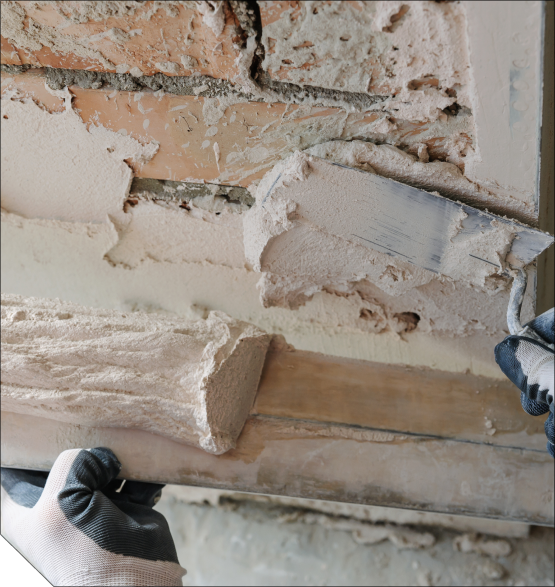
Stucco remediation is a broader process intended to address underlying problems, which may involve removing affected exterior material, evaluating concealed conditions, repairing damaged components, improving water-management details, and rebuilding the exterior.
The visible size of a crack does not, by itself, determine which option is appropriate. The cause, surrounding conditions, moisture findings, and wall assembly all matter.
For a more detailed comparison, read Stucco Remediation vs. Repair: Which Does Your Home Actually Need?.
Can Stone, Brick, or Wood Be Installed Over Damaged Stucco?
New material should not be used to hide unresolved damage.
Covering deteriorated stucco may make the problem more difficult to inspect and can leave the underlying cause uncorrected. If moisture, failed flashing, damaged sheathing, or another wall-system issue is present, the condition should be addressed before the exterior design is completed.
An inspection may show that only a localized repair is needed. In other cases, a broader remediation or exterior replacement plan may be more appropriate.
Planning a Mixed-Material Exterior in Southeastern Pennsylvania
Homes in Delaware County and the surrounding Southeastern Pennsylvania region vary in age, architecture, exposure, and wall construction. A design that works well on one property may not be appropriate for another.
Before choosing stone, brick, wood, siding, or a new stucco finish, evaluate:
- The condition of the existing exterior
- Roof and window transitions
- Areas exposed to runoff or splashback
- Shade and drying conditions
- The home’s architectural style
- Maintenance expectations
- The position of material changes
- The compatibility of colors and textures
Gormley Construction provides stucco repair, stucco remediation, siding, roofing, and exterior-remodeling services throughout communities in Southeastern Pennsylvania. View the company’s service areas to check whether your property is within its coverage area.
See Examples Before Selecting Materials
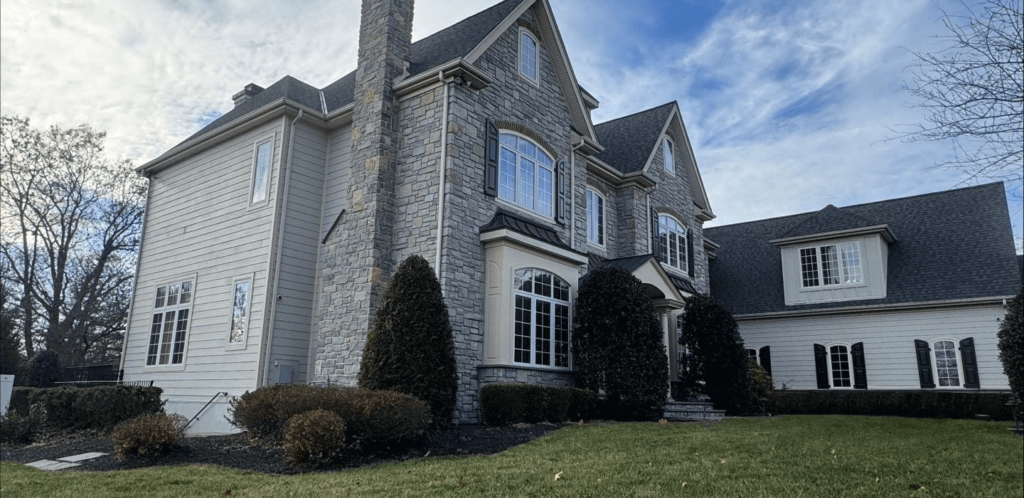
Photos of completed exteriors can help homeowners compare material proportions, colors, and placement. When reviewing a project, look beyond the individual products and consider:
- Where each material starts and stops
- Whether the entrance has a clear focal point
- How the lower and upper stories relate
- Whether the roof and window colors support the palette
- How transitions are handled
- Whether one material clearly leads the design
Visit Gormley Construction’s exterior remodeling gallery to review completed work and gather ideas for your project.
Frequently Asked Questions
What materials look best with stucco?
Stone, brick, wood, fiber-cement siding, and other complementary exterior finishes can work well with stucco. The best choice depends on the home’s architecture, existing colors, maintenance expectations, and wall conditions.
Is stone or brick better with stucco?
Stone is often chosen for a natural, textured, and substantial appearance. Brick usually creates a more structured or traditional effect. Neither material is universally better; the right option depends on the architecture, desired style, installation details, and maintenance preferences.
Where should stone be placed on a stucco house?
Stone is commonly placed around entrances, on columns, along defined lower sections, around chimneys, or on projecting façade areas. It should begin and end at logical architectural boundaries.
Can stone or brick be installed directly over existing stucco?
The answer depends on the existing wall assembly, the condition of the stucco, and the selected installation system. The exterior should be evaluated before work begins so damage is not concealed and transitions can be designed correctly.
Do I need stucco remediation before adding stone or brick?
Not every project requires remediation. Localized surface damage may call for repair, while hidden moisture, damaged components, recurring failure, or broader wall-system problems may require remediation. An inspection helps determine the appropriate scope.
Can mixed exterior materials increase the risk of leaks?
Material transitions can create vulnerable areas when they are poorly designed or installed. Correct flashing, drainage, barriers, sealants, and clearances help the exterior manage water.
Does wood require more maintenance than stone or brick?
Real wood commonly requires more frequent inspection and refinishing than masonry materials. Maintenance depends on the wood species, finish, exposure, installation, and surrounding conditions.
How should I choose colors for stucco, stone, brick, and wood?
Compare all materials together and focus on shared undertones. Review full-size samples outdoors with the roof, windows, doors, trim, and landscaping visible.
How many exterior materials should a house have?
There is no universal limit, but many homes benefit from one primary material, one secondary material, and one restrained accent. Too many finishes or unrelated stopping points can make a façade appear busy.
How long does stucco remediation take?
Gormley Construction states that many remediation projects take approximately four to eight weeks, although the schedule depends on the extent of the damage, project complexity, material choices, and weather. Read the company’s guide to how long stucco remediation takes for a more detailed explanation.
Plan Your Exterior With Gormley Construction
A successful mixed-material exterior must look cohesive and manage moisture correctly. That starts with evaluating the existing stucco, choosing materials that suit the home, and planning every transition before installation begins.
Gormley Construction provides stucco repair, stucco remediation, siding, roofing, and exterior-renovation services for homeowners throughout Southeastern Pennsylvania. Our team can evaluate the existing exterior and help determine an appropriate next step for your property.
Request a free exterior consultation or explore our completed exterior projects to begin planning your renovation.
