
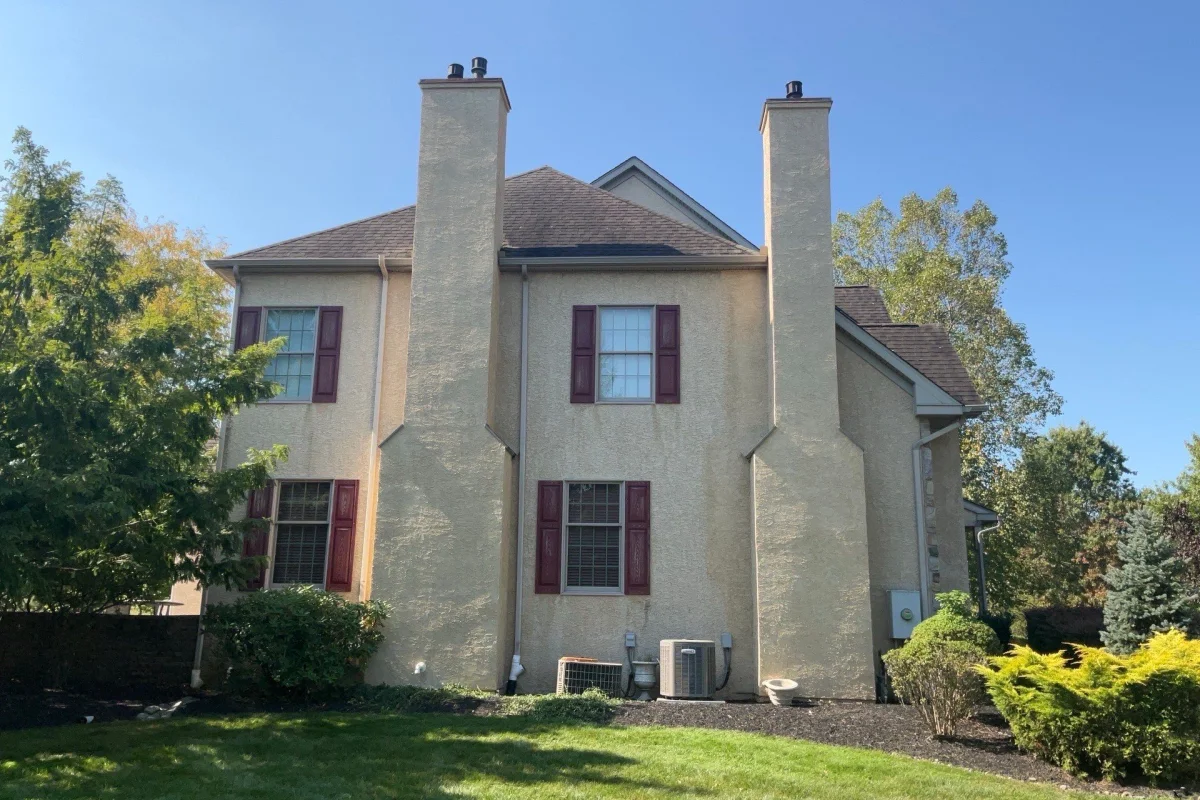
Key Points
- Window flashing directs water away from the opening and back to the exterior. When it is missing, deteriorated, or poorly integrated, water can reach the wall materials behind stucco without leaving an obvious leak at first.
- Stains and cracks near a window are clues, not a diagnosis. A professional assessment should determine whether the issue is limited to a sealant joint or flashing detail, or whether moisture has affected a broader part of the wall.
- The right repair depends on scope. A localized window flashing repair can be appropriate when the surrounding system is sound. Repeated symptoms or evidence of damage behind the stucco may require a broader remediation plan.
The Question Behind a Stain Below the Window
A dark streak below a window, a crack at a corner, or a soft-looking section of stucco can make homeowners wonder whether the window itself is failing. Often, the more important question is whether water is being managed correctly at the opening and directed back to the exterior.
That is the job of window flashing. It works with the weather-resistive barrier, sealant joints, and exterior finish to manage water at one of the wall’s most vulnerable transitions. When those pieces are not working together, the visible stucco symptom may be the first thing a homeowner notices, but it may not reveal the full condition behind the surface.
This guide explains what window flashing failure can look like, how it relates to stucco damage, what affects the scope of repair, and when it makes sense to move from observation to a professional assessment in Delaware County.
1. What Window Flashing Does in a Stucco Wall
A window opening is not protected by one piece of metal or one bead of caulk. Effective water management is a layered system. The details at the head, sides, and sill must work with the drainage plane behind the stucco so water is directed down and out rather than into the wall.
That distinction matters because stucco is the exterior finish, not the only line of defense. A clean-looking stucco surface cannot confirm that the materials behind it are dry, and a visible stain cannot confirm why the problem occurred. The opening, flashing layers, sealant, window condition, and surrounding wall all need to be considered together.
For homeowners, the practical takeaway is simple: do not treat a failed caulk line and a possible flashing problem as the same thing. Caulk can be part of a properly detailed system, but it should not be asked to solve a recurring water-management issue by itself.
2. Warning Signs That Deserve a Closer Look
Window flashing failure is not always visible from the ground. Still, certain patterns near windows are worth documenting, especially when they return after rain or appear in more than one location.
| What you notice | What it may indicate | Best next step |
|---|---|---|
| Dark staining or streaks below a window | Rainwater runoff, staining from adjacent materials, or a moisture-related condition at the opening | Take dated photos, note whether the stain returns after rain, and arrange an assessment if it spreads or repeats. |
| Cracks running from window corners | Movement at the opening, finish cracking, or stress at a wall transition | Monitor a stable hairline crack, but seek assessment if it widens, branches, returns after repair, or appears with staining. |
| Deteriorated or separated sealant | A worn weather-exposed joint that needs evaluation | Do not simply cover recurring symptoms with a new surface bead. Have the surrounding detail reviewed. |
| Soft, bulging, flaking, or crumbling stucco near a window | A condition that may extend beyond the finish layer | Treat this as a prompt-assessment issue rather than a cosmetic patch. |
| Interior staining, peeling paint, dampness, or musty odor near an exterior window wall | A moisture concern with more than one possible source | Document the interior and exterior locations together and seek professional evaluation promptly. |
These signs are reasons to investigate, not proof that the window flashing has failed. Roof runoff, failed trim details, wall penetrations, window performance, and surrounding stucco conditions can create similar symptoms. A proper assessment should separate what is visible from what can be confirmed.
If you are trying to distinguish a changing surface symptom from a larger stucco concern, Gormley’s guide to stucco repair versus remediation can help frame the next conversation.
3. Why Stucco Window Flashing Problems Can Be Hard to Judge
Stucco makes window repair decisions more complicated because key water-management layers are concealed behind the finish. A repair that only addresses the visible crack or stain may improve appearance without correcting the detail that allowed water to reach the wall.
The hardest cases are often the ones that look minor from the outside. A narrow stain at one sill may be surface runoff, or it may point to an issue where the window, flashing, and water-resistive barrier meet. No responsible professional should claim to know which one it is based on a photo alone.
That is also why window flashing repair is not a one-size-fits-all service. The correct scope depends on the window type, the exterior detail, the condition of the surrounding stucco, access to the opening, and whether the wall shows evidence of a localized or more widespread problem.
4. Common Causes of Window Flashing Failure
A flashing issue can arise from more than one condition. The following are common categories to discuss during a consultation, not a checklist for self-diagnosis.
Missing, Incomplete, or Poorly Integrated Layers
Window flashing needs to connect correctly with the layers that manage water behind the stucco. If those layers do not overlap and drain in the right sequence, water can move behind the exterior finish instead of outward.
Aging Sealant or Movement at the Opening
Sealant around a window is exposed to weather and movement. When it cracks, separates, or loses adhesion, it may need attention. But if the symptom is recurring, the assessment should look beyond the sealant itself and into the adjacent flashing and stucco detail.
Water Concentrating Above the Window
Roof-wall intersections, gutters, trim, and other features can concentrate water near a window. A recurring streak below the same opening may be a reason to evaluate where rain is arriving before choosing a repair method.
Window or Surrounding Wall Conditions
The window, the rough opening, and the stucco around it are connected. A window that no longer operates correctly, an opening with signs of deterioration, or a wall with multiple moisture-related symptoms may change the appropriate repair scope.
5. What Window Flashing Repair Can Involve
A professional window flashing repair can range from a targeted exterior correction to a larger opening reconstruction. The goal is not to remove more material than necessary. It is to expose enough of the affected area to identify the condition, reconnect the water-management layers correctly, and restore the exterior finish in a way that fits the actual problem.
| Repair path | When it may be appropriate | What homeowners should ask |
|---|---|---|
| Targeted stucco and transition repair | The issue appears localized and the supporting wall system is sound | What evidence shows the condition is limited to this area? How will the repaired detail connect to the surrounding wall? |
| Window-opening flashing correction | The assessment identifies a problem at the window detail that requires access behind the finish | What exterior material must be removed? How will head, jamb, and sill details manage water after the repair? |
| Broader stucco remediation | The wall shows recurring moisture concerns, widespread deterioration, or damage behind the stucco | What has been found, what cannot be confirmed until removal begins, and how will the new system manage water? |
When the concern is truly localized, Gormley can evaluate whether a targeted stucco repair is appropriate. When conditions point to moisture intrusion or broader failure behind the stucco, the conversation may need to move toward stucco remediation, which addresses compromised exterior materials and rebuilds the system for long-term protection.
A Customer Story: Looking Beyond the Window to the Stucco Below It
Jinsuo Xu had already worked with Gormley Construction once before. In his review, he explained that Ryan completed stucco repair when he moved into the home in 2017, and that the repaired stucco was still in good shape eight years later.
The later project was more focused, but it involved a decision homeowners often face near a window. One older stucco wall needed to be removed and replaced, and the scope included one window replacement. After the old window was removed, the team recommended opening more of the stucco beneath the window so they could make sure no damaged wood was left behind.
That recommendation addressed the homeowner’s real concern: not simply making the new window and stucco look finished, but avoiding an incomplete repair below the opening. Jinsuo wrote that the extra removal was completed “without extra charge” because the goal was to ensure that “no left rotten wood” remained after the work.
The completed window and patched stucco also had to blend with the existing exterior. Jinsuo said the new window and stucco “match well with old surrounding stucco,” and described being satisfied with the result.
Practical takeaway: When a window is being replaced beside damaged stucco, the visible opening may not show the full condition below it. Ask how the area beneath the window will be evaluated, what will happen if hidden damage is found, and how the repaired stucco will be tied back into the surrounding finish.
Read Jinsuo Xu’s original Google review
6. What Drives Stucco Flashing Repair Cost?
Homeowners searching for stucco flashing repair cost are usually trying to understand whether they are dealing with a small exterior correction or a larger wall-system issue. The honest answer is that visible surface area alone does not determine the investment.
The scope is influenced by how many openings are affected, whether access requires scaffolding, the size and type of the windows, how much stucco must be removed to reach the detail, the condition of the materials behind the finish, the amount of flashing and weather-resistive-barrier work required, and the complexity of matching the surrounding exterior.
If a window must be removed or replaced as part of the work, interior trim, finish protection, window selection, and coordination with the replacement window’s installation requirements also matter. A clear proposal should explain what the assessment has confirmed, what may only be visible once the opening is exposed, and how any newly discovered conditions will be communicated.
7. When Professional Repair Should Not Wait
You do not need to assume the worst when you see one minor mark near a window. However, it is sensible to schedule an assessment promptly when a symptom is recurring, spreading, soft or crumbling, associated with interior moisture signs, or located where roof runoff repeatedly reaches the wall.
The same is true when someone proposes a simple exterior patch without explaining how the window flashing and surrounding wall layers will be evaluated. A repair should be based on the source of the problem, not just the most visible symptom.
For Delaware County homeowners, Gormley Construction can assess whether a localized repair is appropriate or whether the evidence points to a wider stucco remediation scope. The goal is to avoid both extremes: unnecessary removal when a focused repair will do, and a cosmetic repair that leaves a recurring water-management issue unresolved.
8. The Right Goal Is a Draining, Durable Window Detail
Window flashing repair is not about making a bead of sealant look new. It is about making sure the window opening, the stucco system, and the layers behind it are working together to manage water.
If you see changing cracks, repeat staining, deteriorated sealant, or interior moisture symptoms near a window, bring photos and a timeline of what you have observed to a consultation. Gormley Construction can help you understand whether the concern is a targeted stucco repair or part of a larger remediation decision.
Questions Homeowners Ask About Window Flashing and Stucco
Can deteriorated caulk around a stucco window cause a flashing problem?
Deteriorated caulk can allow weather exposure at a joint, but it does not tell you by itself whether the flashing behind the finish is working. If the same area keeps staining, cracking, or leaking after sealant work, the surrounding detail needs a broader assessment.
Does every window flashing issue require stucco remediation?
No. A localized issue may be suitable for a focused repair if the surrounding wall system is sound. Remediation becomes relevant when the assessment finds evidence of broader moisture-related or behind-the-surface concerns.
Can window flashing be repaired without replacing the window?
Sometimes, yes. Whether the existing window can remain depends on its condition, the type of window, the details that need access, and the ability to integrate the repaired flashing with the surrounding wall. A professional assessment should explain those factors before work is scoped.
