
Key Points
- Small surface cracks may be repairable, but stains, bulging, soft areas, or recurring leaks can indicate moisture behind the stucco.
- The correct fix starts with an inspection of the stucco and the wall assembly beneath it, not simply filling or painting the visible damage.
- Repair, partial remediation, full remediation, and replacement with another exterior material are different approaches. The best choice depends on the source and extent of the problem.
Stucco problems are not always easy to diagnose from the outside. A crack may be a limited finish issue, or it may be an opening where water can reach the layers behind the cladding. Discoloration can be a surface stain, but it can also point to recurring moisture. That is why the most important question is not, “How do I make this mark disappear?” It is, “What allowed the problem to develop, and is the wall still protecting the home?”
For homeowners in Media, Delaware County, and throughout Southeastern Pennsylvania, this guide explains the most common stucco problems, what they can mean, which repairs are appropriate, and when a more extensive stucco remediation plan may be necessary.
1. What are the most common stucco problems?
The most common stucco problems include cracking, staining, efflorescence, soft or bulging areas, failed sealant around openings, mold or mildew growth, and water intrusion. These signs can have different causes, so they should not all be treated the same way.
Cracks and gaps
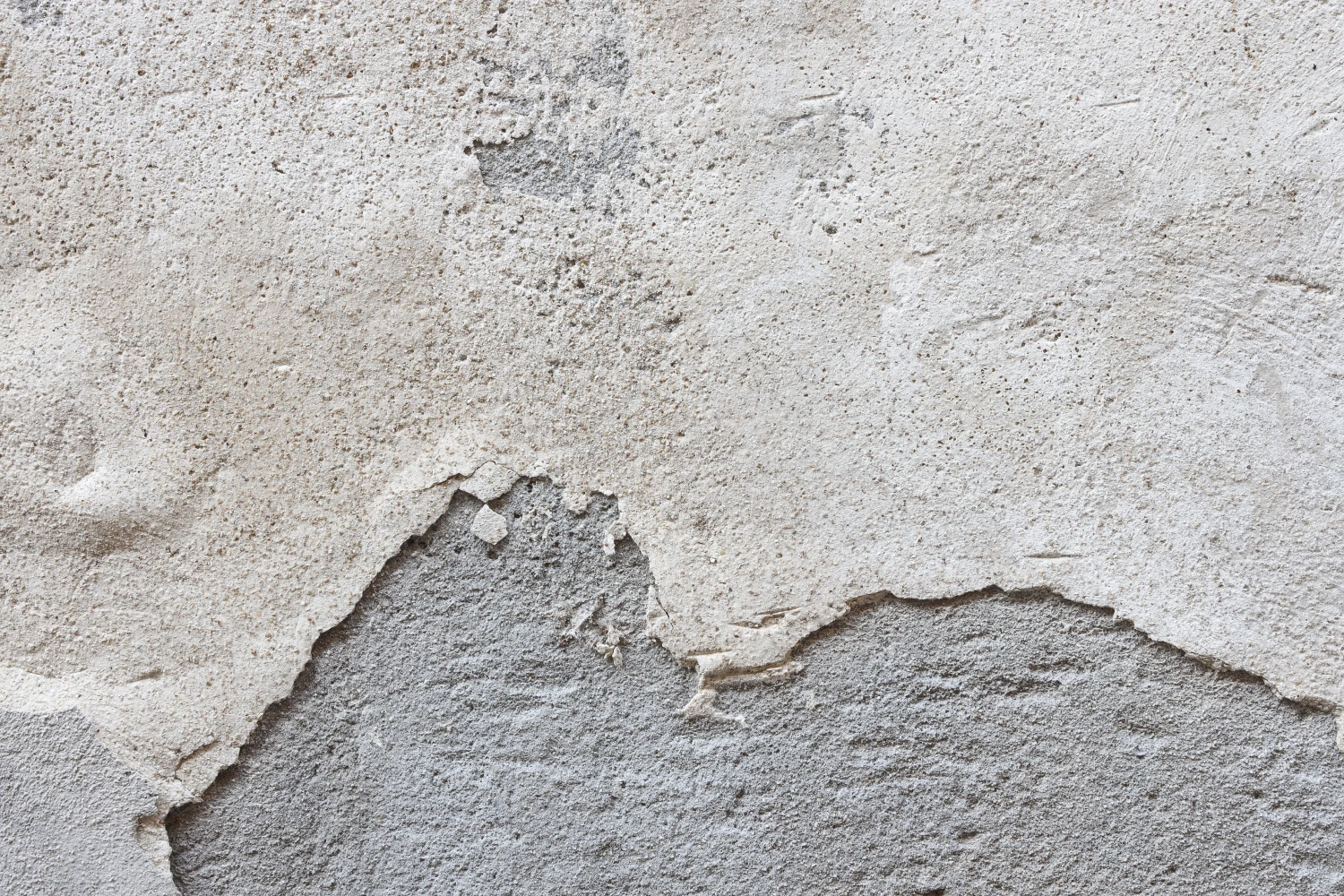
Hairline cracks can develop as stucco dries, ages, or responds to normal movement in the home. Larger cracks, cracks that continue to grow, cracks around windows and doors, and gaps at transitions deserve closer attention because they can create paths for water.
A patch may improve the appearance of a minor, stable crack. It will not correct movement, failed flashing, poor drainage, or wet sheathing behind the stucco. If a crack returns after repair, the underlying cause should be investigated rather than repeatedly covered.
Stains, streaks, and efflorescence
Dark staining, rust-colored marks, or streaks beneath windows, roof lines, trim, and penetrations may indicate that water is repeatedly reaching the same area. White, powdery deposits can be efflorescence, which occurs when moisture moves through masonry or cement-based materials and leaves salts at the surface.
These signs do not prove that structural damage exists. They do show that moisture and drainage deserve attention, especially when the staining returns after cleaning or appears alongside cracks, soft spots, or interior leaks.
Bulging, soft spots, or hollow-sounding stucco
Stucco that feels soft, looks swollen, or has separated from the substrate can indicate that moisture has affected the materials behind it. A hollow sound during a professional evaluation may also warrant further investigation. Do not press, puncture, or remove suspicious areas yourself. Opening an exterior wall can expose hidden damage and create additional water-management details that must be properly restored.
Failed sealant around windows, doors, and penetrations
Joints around windows, doors, vents, hose bibs, lights, and other penetrations are common places for water-management problems to begin. Sealant can shrink, split, or lose adhesion over time. Recaulking may be appropriate when the joint is otherwise sound, but sealant is not a substitute for correctly integrated flashing and drainage layers.
Building Science Corporation notes that stucco moisture problems can involve several interacting parts of the wall assembly, including water-resistive barriers, sheathing, insulation, vapor control, and the stucco itself. That is why a surface-only fix can fail when the real problem is behind the finish.
2. When is stucco repair enough?
Stucco repair may be appropriate when the damage is limited, the substrate is sound, moisture is not being retained behind the finish, and the source of the problem can be corrected. Typical repair work may include cleaning, removing loose material, patching compatible stucco, refinishing the repaired area, and renewing selected sealant joints.
A professional should also consider why the damage occurred. For example, a crack near a roof-to-wall intersection may require attention to flashing or water runoff. A crack that follows a structural or material transition may need a repair detail designed for movement. The patch itself is only one part of the solution.
Repair also has a visual limitation. Even when the repair is technically successful, color and texture may not match an older finish perfectly. Homeowners should ask whether the goal is localized stabilization, a blended cosmetic result, or a broader exterior renovation.
3. When does stucco need remediation instead of a surface repair?
Stucco remediation is generally considered when moisture has affected the materials behind the stucco, when the drainage plane or flashing is not performing properly, or when damage is too widespread for isolated repairs to provide a reliable solution. Remediation can involve removing compromised exterior materials, evaluating the sheathing and framing, correcting water-management details, and rebuilding the exterior assembly.
Gormley Construction describes its stucco remediation process as beginning with an inspection and assessment, followed by removal of compromised materials, installation of a moisture-resistant barrier, replacement with selected exterior materials, and final restoration. The exact scope should be determined after evaluating the home, because visible stucco damage does not establish how far moisture has traveled.
A homeowner should be cautious about any proposal that promises a complete fix without explaining how the underlying wall will be evaluated. Ask for clear answers to these questions:
- What evidence shows that the issue is surface-level or assembly-level?
- Which materials will be removed, and what happens if hidden damage is found?
- How will windows, doors, roof lines, corners, and penetrations be integrated into the new water-management system?
- Will the proposal distinguish confirmed conditions from allowances or unknowns?
- What finish options are available if keeping the existing stucco is not the best long-term choice?
4. How is stucco repaired or remediated?
The work sequence varies by home, but a sound process usually follows the cause of the problem rather than jumping directly to a finish coat.
Step 1: Inspect the exterior and relevant interior areas
The evaluation should document cracks, stains, transitions, penetrations, windows, doors, roof intersections, and any interior evidence of leaks. The goal is to understand water entry and drying paths, not simply to photograph the most visible defect.
Step 2: Determine the scope of damage
If limited areas are opened or removed, the exposed substrate can help establish whether the issue is localized or more extensive. Moisture-damaged sheathing, framing, or insulation may require additional work. Any change in scope should be explained before proceeding whenever practical.
Step 3: Correct water-management details
A durable repair must manage water that reaches the exterior assembly. Depending on the design, this may involve flashing, a water-resistive barrier, properly detailed transitions, drainage provisions, and compatible materials. Building Science Corporation emphasizes that bond breaks and drainage space can be important to the performance of stucco assemblies. The appropriate detail should follow the project’s wall design, product instructions, and applicable requirements.
Step 4: Restore the finish
The final exterior may be repaired stucco, new stucco, fiber-cement siding, or another suitable material. Gormley Construction lists updated stucco systems and James Hardie fiber-cement siding among possible replacement approaches, but the right material depends on the home, the existing assembly, design goals, and the condition found during evaluation.
Step 5: Review the completed work
Before the project is considered complete, the homeowner should receive a walkthrough of the repaired areas, finish transitions, drainage-related details, and any maintenance recommendations. Keep the proposal, change orders, product information, and warranty documentation with the home’s records.
5. What affects the cost of fixing stucco problems?
The cost of stucco repair or remediation depends more on the condition and scope of the wall than on the visible crack alone. Important cost factors include:
- The total area requiring removal or repair.
- Whether damage extends into sheathing, framing, insulation, or interior finishes.
- The number and complexity of windows, doors, corners, roof lines, decks, and penetrations.
- Access, scaffolding, site protection, and disposal requirements.
- Whether the existing finish can be matched or must be replaced across a larger area.
- The chosen replacement material and the detailing required at transitions.
- Permit, engineering, testing, or specialty evaluation requirements when applicable.
A lower initial proposal is not necessarily the better value if it excludes investigation, water-management corrections, or allowances for clearly possible concealed damage. Homeowners should compare the scope, exclusions, assumptions, materials, payment schedule, warranty, and change-order process rather than comparing only the bottom-line number.
6. Can a homeowner fix stucco problems without professional help?
A homeowner can monitor the exterior, keep gutters and downspouts functioning, trim vegetation away from walls, and document changes with dated photographs. Very limited cosmetic maintenance may also be possible for someone with the right product knowledge and safe access.
Professional evaluation is the safer choice when there are recurring leaks, widespread cracks, bulging, soft areas, staining that returns, mold concerns, suspected substrate damage, or defects around windows and roof intersections. Stucco is part of a weather-resistant wall system. A patch that looks good but traps moisture or leaves a transition unprotected can create a larger problem.
7. What Gormley Construction Customers Say About Stucco Work
The following two customer experiences come from the supplied public reviews. They are presented as customer-reported experiences, not guarantees or independent verification of the underlying project conditions.
A Plymouth Meeting stucco home illustrates why exterior problems often involve more than stucco
Mark Greenfield’s review offers a useful lesson for homeowners who find moisture damage during an invasive stucco inspection. Mark wrote that he and his wife found their dream home in Plymouth Meeting, but the 25-year-old stucco house had substantial moisture damage all the way around. The roof and windows were also near the end of their expected lifetimes, so the project became a broader exterior decision involving siding, roofing, and windows rather than a simple stucco patch.
That distinction matters because a home’s exterior systems work together. If stucco damage is found at the same time as aging windows or a roof nearing replacement, homeowners may need to compare the cost and disruption of addressing each component separately with the design and water-management advantages of planning the exterior as a whole. Mark wrote that the family obtained three quotes and that Ryan Gormley was quick to respond, transparent about the process, and able to stay with the timeline and original budget despite a rainy spring.
Mark also described the value of an unbiased outside perspective. He wrote that the stucco inspector had a high opinion of Gormley’s work and fair pricing practices, helped review the quotes, and considered Gormley’s proposal the most detailed and reasonable while still being competitive for the market. Homeowners should not assume that every project will receive the same assessment or remain within the original budget, but they can follow the same decision-making principle: obtain a detailed scope, compare proposals carefully, and ask what is included when siding, roofing, windows, electrical systems, and plumbing fixtures meet the exterior.
Mark said Ryan helped the family decide what needed to be done, provided flexibility around the design, personally oversaw the work, and made sure outdoor electrical and plumbing systems functioned with the new siding. He also noted that the building team was friendly and considerate during construction. His experience is a reminder that a stucco remediation consultation may need to address the complete exterior plan, not only the finish visible from the street.
An eight-year stucco repair illustrates the value of addressing damage beneath a window
Jinsuo Xu’s review provides a different perspective because it covers both earlier repair work and a later stucco replacement. Jinsuo wrote that Ryan and his crew performed stucco repair in 2017 when the family moved into a new home, and that the stucco was still in good shape after eight years. In 2025, one older stucco wall needed to be removed and replaced, along with one window.
The location of the damage is important. Jinsuo wrote that when the old window was removed, the team recommended removing more stucco beneath the window so damaged wood could also be removed. According to the review, this additional work was completed without an extra charge because the goal was to avoid leaving rotten wood behind. For homeowners, the lesson is not that every window replacement requires the same scope, but that the area below a leaking or deteriorated window may deserve closer evaluation than the visible stucco surface alone.
Jinsuo also wrote that Keith supervised the project, the quote was reasonable, and the new window and patched stucco matched the surrounding older stucco well. He described improvements in stucco wall installation over the years and said the newer stucco used on his home was more durable and had more ability to breathe around moisture. Those material-performance statements are his customer perspective rather than a universal technical conclusion, so homeowners should ask which stucco system is proposed, how it is designed to manage water, and how it will be integrated with the existing wall.
His experience demonstrates why a targeted stucco repair should begin with inspection rather than a predetermined patch. If the wall and surrounding materials are sound, repair may preserve the existing appearance. If a window opening or damaged wood reveals a deeper issue, the appropriate scope may expand to remove compromised materials and restore the assembly correctly.
Conclusion: Fix the cause, not just the stucco surface
The best way to fix stucco problems is to identify whether the issue is cosmetic, localized, or connected to moisture behind the exterior. Repair may be enough for sound, limited damage. When the wall assembly has been compromised, remediation or replacement may provide a more appropriate path.
Gormley Construction is a family-owned exterior remodeling company based in Media, PA, serving homeowners throughout Delaware County and Southeastern Pennsylvania. Its official website identifies stucco repair and remediation among its services and invites homeowners to request a consultation or estimate. If you are seeing cracks, stains, soft areas, or signs of water intrusion, contact Gormley Construction at (610) 400-3999 or use the company’s contact page to discuss an evaluation.
Frequently Asked Questions About Stucco Problems
Is every stucco crack a sign of serious damage?
No. Some cracks are limited to the finish, but crack size, location, recurrence, and nearby moisture signs matter. A recurring crack or one near an opening, transition, or roof line deserves professional evaluation.
Can stucco be repaired without removing it?
Sometimes. A limited repair may be appropriate when the substrate is sound and the cause has been corrected. Removal is more likely to be necessary when moisture has damaged materials behind the stucco or when the existing water-management system is not performing properly.
Is stucco remediation the same as replacing stucco with siding?
No. Remediation describes correcting underlying problems with the exterior assembly. The final finish may be new stucco, fiber-cement siding, or another suitable material. The appropriate choice depends on the home’s condition, wall design, appearance goals, and project scope.
