
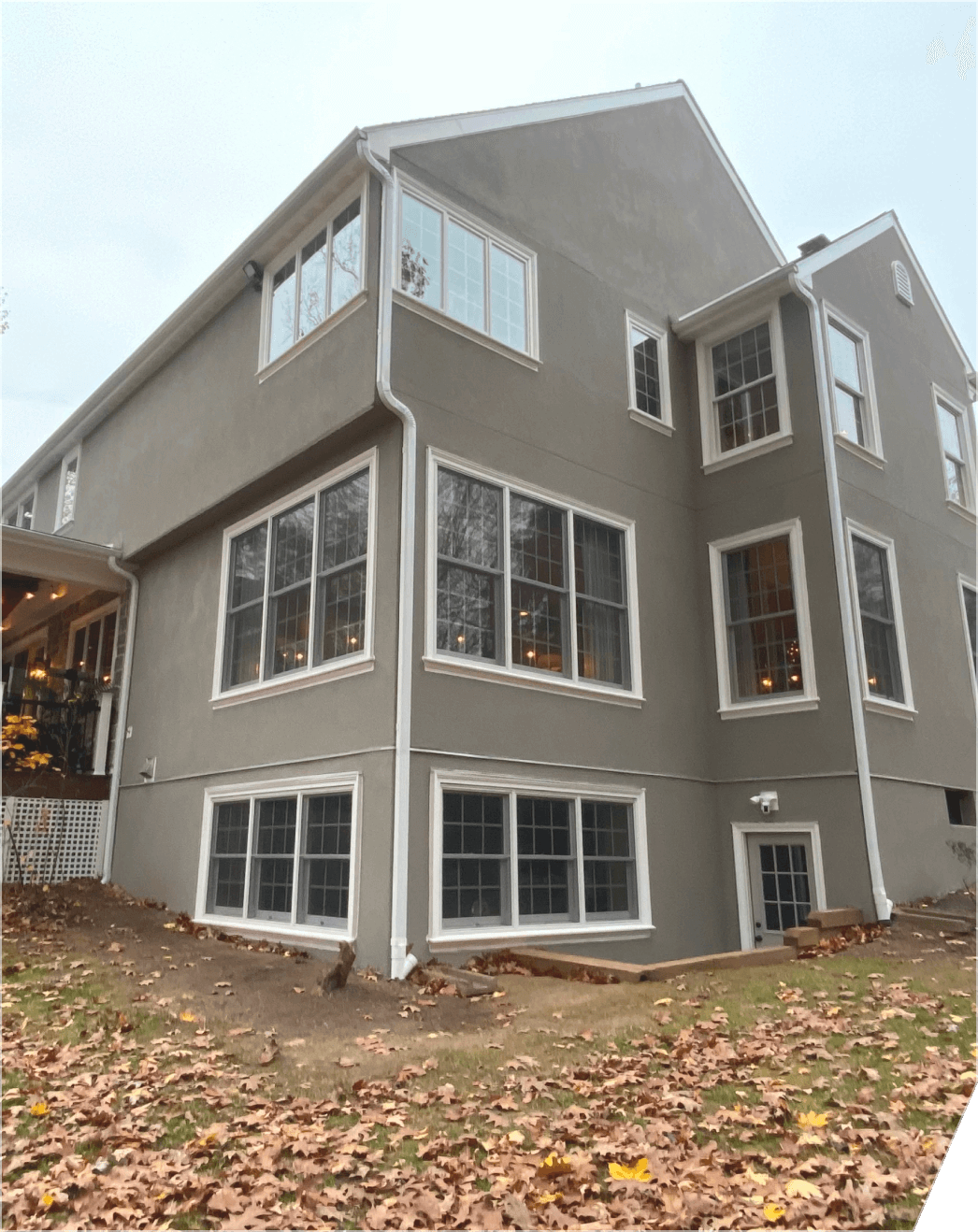
Key Points
- Stucco remediation does not automatically mean every window must be replaced. The decision should be based on the window’s condition, the condition of the opening, the remediation scope, and whether the existing window can be properly integrated with the rebuilt wall system.
- Remediation can create a practical coordination opportunity. When stucco is removed around an opening, the team can evaluate the surrounding materials and plan how flashing, weather protection, and the exterior finish will reconnect.
- The lowest-disruption option is not always the most complete solution. Leaving an existing window in place can make sense when it is sound and compatible with the work. Full-frame replacement may be worth considering when the opening needs access for a lasting water-management detail.
The Real Question Is Not “Should I Replace Every Window?”
Homeowners facing stucco remediation often ask whether the windows have to come out too. It is a reasonable question because the exterior finish is being removed, window details become accessible, and no one wants to add unnecessary work to an already significant project.
The most honest answer is that window replacement during stucco remediation is a project-specific decision. Some windows can remain. Others may deserve replacement because their condition, installation, surrounding damage, or the planned wall detail makes keeping them a poor long-term choice.
This is not a standalone window-replacement guide. It is about coordinating window decisions with a stucco project so the rebuilt wall system, window openings, flashing, and exterior finish work together.
[Insert a process graphic showing the relationship between a window, flashing, weather-resistive barrier, insulation, sheathing, and stucco or replacement cladding. Suggested alt text: “How window replacement is coordinated with stucco remediation in a residential exterior wall.”]
1. Why Windows Matter in a Stucco Remediation Project
Windows are one of the places where several exterior systems meet. The window frame, rough opening, flashing, sealant, weather-resistive barrier, trim, and stucco finish all need to manage water in sequence.
When a remediation project removes failing or compromised stucco, it can reveal the materials and details around an opening that are otherwise hidden. That does not mean the window is automatically defective. It does mean the team has an opportunity to evaluate whether the existing window and opening can be integrated correctly with the rebuilt exterior system.
Gormley’s stucco remediation service is designed to identify moisture intrusion and damage behind failing stucco, remove compromised exterior materials, and rebuild the system for long-term protection. The window decision should support that larger goal, not turn the project into an unrelated window sale.
2. When Existing Windows May Be Able to Stay
Keeping existing windows can be a sensible decision when their condition is sound and they can be properly integrated with the remediation work. It may reduce the number of moving parts in the project and avoid unnecessary work inside the home.
A professional assessment should consider the window’s operation, visible condition, performance history, the integrity of the surrounding opening, and the details required to reconnect flashing and weather protection. If the window is functioning well, there are no known concerns at the opening, and the remediation design can create a durable transition around it, replacement may not be necessary.
The key phrase is may not be necessary. A decision to retain windows should be supported by what the project team can observe and explain, not by an assumption that leaving them in place is always the easiest choice.
| Keeping the existing window may be reasonable when | Replacement should be discussed when |
|---|---|
| The window operates properly and has no known performance issues. | The window has known operating, water, or condition concerns. |
| The surrounding opening is sound based on the assessment. | Damage or deterioration is found at the opening as the stucco is removed. |
| The window can be properly connected to the rebuilt flashing and weather-protection layers. | The existing installation prevents a reliable integration with the new wall detail. |
| The project scope is limited and does not require broader opening reconstruction. | The project already requires substantial access to the opening and adjacent materials. |
This is a decision framework, not a remote diagnosis. A wall can look similar from the outside while requiring a very different scope once the stucco and related layers are evaluated.
3. When Replacing Windows in Stucco Walls Is Worth Considering
The best time to discuss replacement is before the remediation scope is finalized, not after materials are ordered. If replacement is likely to be part of the project, early coordination helps the team plan flashing, exterior details, finish transitions, and the work sequence around the actual window type.
Replacement may merit consideration if the existing window has known problems, the rough opening needs repair, the surrounding installation cannot be integrated properly with the rebuilt wall system, or the homeowner already planned to upgrade the windows in the near future. It can also be a practical choice when multiple windows need attention and the remediation work has already created access to the areas around them.
The decision should not be driven by appearance alone. A new window set into an opening with unresolved water-management issues does not solve the underlying problem. The priority is a complete, coordinated detail that manages water from the exterior finish back to the drainage layers and out of the wall.
4. What Good Project Coordination Looks Like
Window replacement during stucco remediation requires a clear sequence. The team should know which windows are staying, which may be replaced, who is supplying them, what installation requirements apply, and how the new or existing windows will connect with the rebuilt wall system.
A well-coordinated plan typically addresses four questions before work begins.
| Coordination question | Why it matters |
|---|---|
| Which windows are being retained, repaired, or replaced? | The answer sets the scope around each opening and helps prevent last-minute decisions. |
| What will be learned once the stucco is removed? | Some wall conditions cannot be confirmed until exterior layers are opened. The homeowner should understand how discoveries will be documented and discussed. |
| How will flashing and weather protection reconnect at each opening? | The window, flashing, and weather-resistive barrier must work as one water-management system. |
| How will interior finishes, landscaping, and daily access be protected? | Window work can affect interior trim, dust control, protection of furnishings, and use of rooms near the openings. |
This level of planning is especially important in older Delaware County homes where earlier renovations may have created layers of existing conditions. No two openings are guaranteed to be identical, even on the same house.
A Customer Story: When Full Remediation Revealed the Real Window-and-Wall Scope
Stephen Moore’s review describes a full stucco remediation project on an approximately 16-year-old, three-story detached home in Manayunk, Philadelphia. Although this article is written for Delaware County homeowners, the project is a useful example of why window decisions must be coordinated with the entire wall system rather than treated as an isolated replacement.
The original scope required removal of all stucco, replacement of substantial water-damaged and rotted wood, and removal and proper flashing of all windows and doors. The project also included temporarily detaching two porch decks, installing two sliding doors, replacing rotted beams, completing related interior trim work, installing Hardie-board siding with Azek trim, and rebuilding a water-damaged roof deck.
The homeowner’s central challenge was uncertainty about what would be found once the exterior was opened. Stephen wrote that the project took longer than expected because “the full extent of the rotted wood could not be determined until the entire exterior of the house was finally exposed.” He specifically noted that the team discovered issues such as a defective roof deck and rotted boards connecting the porches to the house.
That is the part of remediation homeowners should discuss before work starts. It is not reasonable to expect a team to see every concealed condition through the stucco. It is reasonable to expect a clear process for investigating exposed areas, explaining new findings, and coordinating the work around windows, doors, exterior finishes, and interior trim.
Stephen also described Ryan’s regular site visits during the two-month project and said that Ryan and the on-site crew manager, Alex, were “fantastic at addressing all our questions and concerns” while working to limit disruption during the reconstruction. The finished exterior used Hardie-board siding and Azek trim, which shows how a siding replacement decision can be part of a larger remediation plan when the existing stucco system is removed.
Practical takeaway: A window replacement during remediation may be only one part of a broader exterior reconstruction. Before approving the work, ask what can be confirmed now, what may only be known after removal, how flashing and finishes will be coordinated, and how any newly uncovered conditions will be documented and discussed.
Read Stephen Moore’s original Google review
5. What Affects the Scope and Investment
There is no responsible single price for replacing windows in stucco walls during remediation. The investment depends on factors that are visible before work begins and factors that may only become clear once the exterior system is opened.
The number and size of windows matter, as do window type, access, interior trim work, protection and restoration of finishes, the condition of the rough openings, and the complexity of integrating flashing and weather protection. Material selections, replacement cladding choices, and any repairs to surrounding sheathing or insulation can also change the scope.
A clear proposal should separate the remediation work from the window-related decisions. It should explain which windows are planned to remain, which windows are included for replacement if applicable, what details will be used to reconnect the wall system, and how newly discovered opening conditions will be communicated.
This transparency protects homeowners from two common problems: paying for replacement windows that were not needed, or preserving an existing window without discussing whether it can be properly integrated into the repaired wall system.
6. Choosing the Exterior Finish After a Window-and-Stucco Project
Once remediation is underway, homeowners may choose to return to an updated stucco finish or select another exterior cladding. The right choice depends on the home’s design goals, the planned wall assembly, and the details needed at windows, doors, rooflines, and other transitions.
Gormley’s remediation service page identifies updated stucco and James Hardie fiber cement siding as possible replacement finishes. If a homeowner is considering an exterior material change after remediation, Gormley’s siding replacement service provides information about the siding options it installs. That is an exterior-finish decision connected to remediation, not a substitute for evaluating the windows and openings first.
7. Questions to Ask Before the Project Starts
Before approving a stucco remediation scope that involves windows, ask for clear answers in writing. The best questions are not “Can you replace my windows?” but “How will this opening be managed as part of the rebuilt exterior?”
| Ask this question | What a useful answer should explain |
|---|---|
| Can my existing windows remain? | The observed condition of the windows and openings, plus any limits to confirming the full condition before removal. |
| If a window stays, how will it integrate with the new flashing and wall layers? | The planned relationship between the window, flashing, weather protection, and finish transitions. |
| If a window is replaced, what is included around the opening? | The access required, flashing work, finish restoration, interior trim implications, and manufacturer-installation requirements. |
| How will you handle conditions discovered after removal? | The documentation, communication, approval process, and the way scope changes are addressed. |
| What work is remediation, and what work is window replacement? | A clear separation of scope so homeowners can compare options intelligently. |
8. Make the Window Decision Part of the Whole Wall Plan
The right choice is not always to replace every window, and it is not always to leave every window in place. The right choice is the one that allows the remediated stucco wall to manage water correctly and supports the homeowner’s long-term plans for the home.
For Delaware County homeowners dealing with failing stucco, Gormley Construction can help assess the exterior system, explain when targeted stucco repair may be enough, and discuss when a broader remediation project should coordinate work around existing or replacement windows. A consultation should leave you with a clear scope, not a vague promise that every opening will be handled the same way.
Questions Homeowners Ask About Windows During Stucco Remediation
Do windows always need to be removed during stucco remediation?
No. Whether a window can remain depends on its condition, the opening, the remediation design, and whether the existing installation can be properly integrated with the rebuilt flashing and wall layers. The decision should be made opening by opening when the scope requires it.
Is it less expensive to replace windows while the stucco is already removed?
Removing stucco can create access around a window, but that does not automatically make replacement the right value. The decision still depends on the window’s condition, the opening detail, interior work, flashing needs, and the homeowner’s future plans. Ask for a scope that separates the remediation work from any optional window replacement.
Can a new window solve a stucco moisture problem by itself?
No. A replacement window must be integrated with the flashing, weather-resistive barrier, and exterior finish. If the wall system has broader moisture-related concerns, the remediation plan needs to address those conditions as well.
